How to Choose the Right 45 Ton Underground Truck for Hard Rock Mining
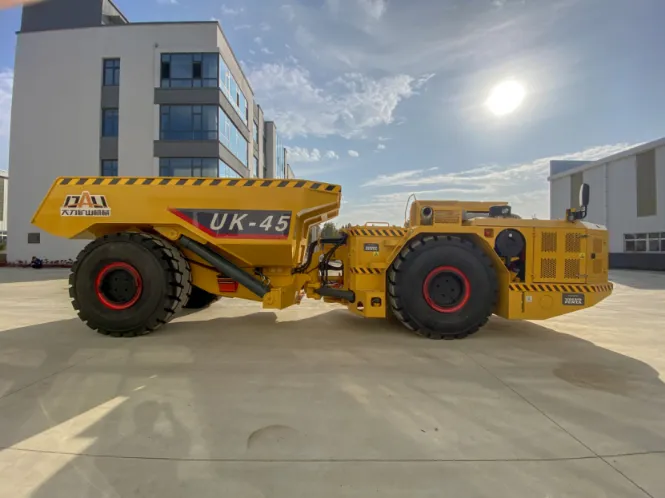
Why the Right Underground Truck Matters in Hard Rock Mines
Underground hard rock mines rely heavily on transport systems. Long ramps, heavy loads, and abrasive rocks push equipment hard. Picking the wrong truck jacks up cost per ton fast.
It’s not about going bigger every time. Match that payload to tunnels, ramps, and output goals. Get it right, and operations flow smoother.
In many hard rock projects supported by Dali, the most productive fleets are not just the biggest trucks, but underground trucks correctly matched to ramp design and loading equipment.
What Makes a 45 Ton Underground Truck Different?
A 45 ton underground truck stands out in tough spots. These machines handle big hauls without overwhelming the site.
Typical Specifications of a 45T Underground Truck
Most 45T underground trucks carry 45 tons payload. Box capacity hits around 25-30 cubic meters. Width stays under 3 meters, height about 3.5 meters, total length near 10 meters. Engine power often tops 500 horsepower. Turning radius? Usually 8-10 meters inside.
Compare to 20-30t models. Smaller ones fit tighter spots but move less rock per trip. The 45t boosts output, yet demands bigger tunnel sections.
Sometimes folks overlook how low profile design helps in squeezed drifts. It keeps the truck agile.
Why 45T Works Well in Medium-to-Large Hard Rock Mines
These trucks suit mines pushing 5,000-10,000 tons daily. They match main haulage tunnels wide enough for safe passing. Pair with crushers and hoists that handle the flow.
Haulage capacity jumps with fewer trips. Mine development stays efficient without constant tweaks.
Hard Rock Mining Challenges That Your 45T Truck Must Handle
Hard rock throws curveballs. Steep ramps, tight spaces, gritty dust. The truck has to push through.
Steep Decline Ramps and Long Haul Distances
Ramps often slope 10-15%. Hauls stretch kilometers. Trucks need strong gradeability for climbs. Brakes must hold on descents without overheating.
Ramp haulage eats time if power lacks. Test that setup early.
Narrow, Low-Profile Tunnels
Tunnels squeeze to 4-5 meters wide, 4 meters high. Turning radius matters at bends and junctions. Low profile underground truck design prevents scrapes.
Drift design factors in truck width and height. Miss this, and traffic jams underground. Ever seen a truck stuck at a curve? Happens more than you’d think.
Abrasive Rock, Dust and Heat
Rock grinds frames and boxes. Dust clogs filters. Heat builds in deep levels, stressing cooling systems.
Mine ventilation pulls double duty, clearing fumes and cooling. Frame durability saves headaches later.
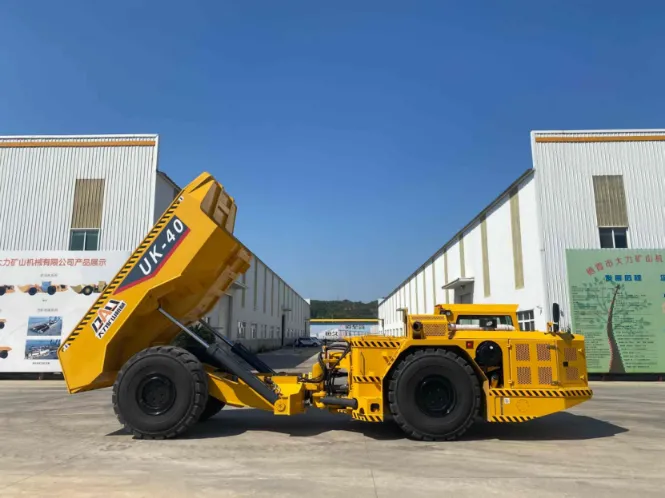
Key Factors When Choosing an Underground Truck
Selection boils down to fit. Weigh these points carefully.
1. Matching Payload to Mine Production and LHD Size
Link 45t payload to daily targets. Figure loads per shift, match LHD bucket size. Too many scoops? Cycle time drags. Loading efficiency shines with 6-8 passes versus 10-12. Keeps things moving.
2. Dimensions, Turning Radius and Mine Layout
Scan tunnel width, height against truck specs. Add turning radius for bends. Works in narrow vein mines? Check twice. Mine layout dictates flow. Tight spots kill productivity.
3. Powertrain, Gradeability and Ramp Profile
Engine power and torque drive climbs. Gearbox and axles handle torque. Power-to-weight ratio keeps speed up. Leave 20% margin for rough days. Ramp haulage performance holds the key.
4. Brake Performance and Safety Features
Look for SAHR brakes, service and parking options. Downhill assist prevents slips. Automatic tests add peace.
ROPS FOPS cabin shields operators. Fire suppression, reverse cameras, visibility aids cut risks. Underground truck safety starts here.
5. Fuel Efficiency, Emissions and Ventilation Load
Diesel versus electric underground truck? Diesels guzzle fuel, spike ventilation costs. Electrics cut emissions, ease air flow. Deep mines factor ventilation cost per ton. It adds up quick.
6. Reliability, Maintenance Access and Parts Support
Easy access points speed fixes. Centralized lube helps. Long component life stretches intervals. Spare parts availability slashes downtime. Total cost of ownership reveals the real picture.
Operators working with Dali often highlight that consistent parts availability and clear maintenance intervals are just as important as the truck’s headline payload figure.
Step-by-Step Process to Select the Right 45T Truck for Your Mine
Follow these steps. Builds a solid choice.
Define Your Duty Cycles and Production Target: Pin down shift output, haul distances, grades, load/unload spots. Haulage cycle sharpens the plan.
Check Fit with Mine Geometry: Map tunnel sections to truck size. Verify space at stations.
Calculate Required Power and Gradeability: Total weight times grade equals power need. Aim for target uphill speed. Thumb rule: 1 horsepower per ton on 10% grade keeps 10 km/h.
Evaluate Safety and Operator Environment: Stack brands on safety gear, views, noise, vibes. Differences show in daily runs.
Compare Lifetime Cost, Not Only Purchase Price: Tally fuel, tires, upkeep, overhauls, resale. Lifetime cost comparison spots winners.
Many mines ask Dali to run haulage simulations with their 45T underground trucks, comparing different ramp profiles and fleet sizes before making a final purchase decision.
Is a 45T Truck the Best Choice for Your Hard Rock Ramp?
Picture a mine: 1 km ramp at 12% grade, 8,000 ton daily goal, 5 cubic meter LHD. 30t trucks need more units, bump fleet size to 10. Cycles hit 15 minutes. Cost per ton climbs.
45t cuts fleet to 7, cycles to 12 minutes. Savings shine if ramps fit. But in tight veins? Stick smaller. Ramp haulage calculation shows when 45 ton truck example pays off.
Common Mistakes When Choosing a 45T Underground Truck
Folks skip tunnel checks, ignore real grades. Haulage bottlenecks form.
Mismatch LHD and truck? Loading drags. Eye purchase price only? Miss ventilation, upkeep hits.
Troubleshooting later costs more.
Quick Checklist for Mine Engineers and Purchasing Teams
-
Verified 45t clearance in key tunnels and turns?
-
Got clear output goals and haulage cycle math?
-
Checked gradeability, brakes on steepest ramps?
-
Assessed ventilation for exhaust heat?
-
Secured parts and service pledges?
-
Matched LHD for efficient loads?
-
Factored power margin for bad spots?
-
Compared total ownership costs?
-
Reviewed safety configs head-to-head?
-
Run sims for fleet size?
Conclusion
The right 45 ton underground truck beats the biggest one. Tie mine geometry, goals, safety, and total cost together.
A well-chosen 45T underground truck fleet steadies hard rock mining productivity, keeps safe and efficient haulage rolling for years.
FAQ
Q: What factors matter when choosing a 45 ton underground truck?
Key factors include payload, truck dimensions, turning radius, engine power, gradeability, safety systems, and total cost of ownership.
Q: Why is gradeability important in hard rock mining trucks?
Steep decline ramps are common in hard rock mines, so a truck must maintain safe, efficient uphill and downhill performance under full load.
Q: How do mine tunnel dimensions affect truck selection?
The truck’s width, height, and turning radius must match the drift size; otherwise, maneuvering becomes unsafe or impossible.
Q: How should a 45T truck match with LHD loaders?
The LHD bucket size should allow efficient loading—ideally 6–8 passes—to keep cycle time short and production stable.
Q: What safety features are essential for underground haul trucks?
Important features include ROPS/FOPS cabins, SAHR brakes, fire suppression, reverse cameras, and emergency stopping systems.
About Us
Qixia Dali Mining Machinery Co., Ltd was established in 1998, located in Yantai City.
The company is mainly engaged in the design, development, production, installation and training of underground mine equipment and ore processing equipment, spare parts supply and sales.
More目-4000tpd鉛鋅礦EPC-1-150x150.jpg "Zinc & Lead Processing Project in Kalimantan, Indonesia")
柲稠?xiàng)目-1000tpd金礦EPC2-150x150.jpg "1000tpd Gold Mine Project in Mongolia")
目-1000tpd銅礦EPC-1-150x150.jpg "Copper Processing Project in Sinkiang")
目-3000tpd石墨礦EPC-150x150.jpg "Graphite Processing Project in Jimo City")
目-500tpd金礦EPC-150x150.jpg "Gold CIP Project in Zambia")
Contact Us
- Xinbang Rd, Private Economy Park, Qixia, Shandong Province, China
- +86 173 5350 8179
- ytdali@ytdali.com
 +86 13553073459
+86 13553073459
+86 13553073459


